



Gottfried Silbermann

“Famous Silbermann, permit me to write what you have rightfully earned:
Your renown will last eternally. That which you are already worthy of through your craft with a most skilful hand […].”
Wilhelm Friedemann Bach, 1736
Gottfried Silbermann (1683–1753) was one of Germany’s most celebrated master organ builders. Even today, his instruments continue to enthral organ enthusiasts and music lovers from around the world. The distinctive, silvery sound of his organs and the fusion of Alsatian and Central German organ-building traditions made his instruments unique and influential. Thanks to Gottfried Silbermann, Freiberg flourished as a centre of Saxon organ building and the heart of a remarkable organ landscape. In his workshop on Schloßplatz in Freiberg, Silbermann built 45 organs. He also created more than 200 keyboard instruments, including harpsichords, clavichords and fortepianos.
Organ Builder, Businessman, and Teacher
Little is known about the private life of Gottfried Silbermann (1683–1753). Not even a portrait of him has survived. There is no doubt, however, that Gottfried Silbermann is regarded as one of Germany’s most eminent master organ builders—and rightly so. His life and work are closely linked to the development of musical culture during the Baroque period. His organs, often described as the queens of instruments, can still be found in many churches in Central Germany today. Silbermann’s organ-building tradition shaped the art of organ building for generations and influenced subsequent periods. The overall design, intricate craftsmanship and clarity of sound make his organs unique and unrivalled to this day. The use of high-quality materials and excellent workmanship ensured their longevity. The great organ in Freiberg Cathedral, for example, remains virtually unchanged to this day. In addition to his famous organs, Gottfried Silbermann also built more than 200 keyboard instruments, including harpsichords, clavichords and fortepianos.
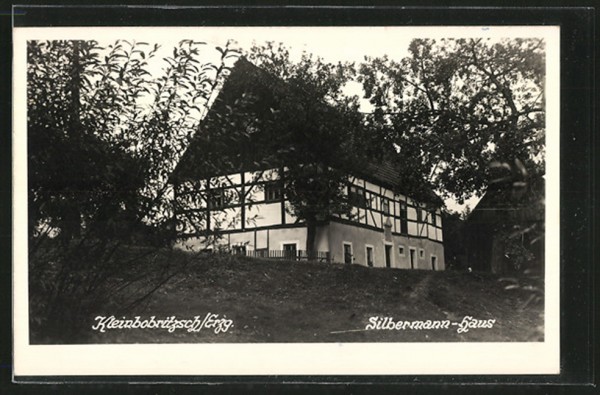
Gottfried Silbermann’s birthplace in Kleinbobritzsch.
Gottfried was born on 14 January 1683 in the village of Kleinbobritzsch in the Ore Mountains. He was the youngest son of Michael Silbermann, a carpenter. At the end of 1685, the family moved from his birthplace—which still stands today—to the nearby town of Frauenstein. Through his father’s trade, Gottfried became familiar with woodworking at an early age. In his own words, he felt a “particular inclination towards organ building” from an early age.
In 1701/02, he followed his elder brother Andreas, who was five years his senior, to Strasbourg, where he trained as an organ builder under his brother’s guidance. After completing his apprenticeship and working alongside Andreas for several years, Gottfried gained further experience as an organ and harpsichord builder in France before returning to Saxony in 1710. He initially built a small organ for his adopted hometown of Frauenstein. With the support of Johann Kuhnau, Thomaskantor in Leipzig, he was subsequently commissioned to build the organ for Freiberg Cathedral, which he completed in 1714 and modified in 1738.
In 1711, Silbermann moved into his new home and workshop on Schloßplatz in Freiberg. Favourable trading conditions for the procurement of building materials, together with his close collaboration with local craftsmen and suppliers, helped establish Freiberg as the centre of his work. He remained there for the rest of his life. In 1723, Frederick Augustus I awarded Silbermann the title of “Saxon Court and State Organ Builder”. Although he received prestigious commissions from outside Saxony, he declined them, limiting his organ-building activities to Saxony and parts of what are now Thuringia and Brandenburg.
By the time he fell seriously ill in 1749, 43 organs had been built in his Freiberg workshop. The later instruments in Frankenstein and Dresden Cathedral were largely constructed by his workshop craftsmen. Silbermann entrusted his former apprentice Zacharias Hildebrandt with overseeing the construction of the Dresden organ. Following Silbermann’s death on 4 August 1753, his nephew Johann Daniel succeeded him. The organ for Dresden Cathedral was not consecrated until February 1755.
As a master craftsman and head of his workshop, Gottfried Silbermann exerted a lasting influence on his apprentices and fellow craftsmen, thereby shaping the entire Central German organ-building tradition. Among the organ builders associated with this tradition were Zacharias Hildebrandt, Joachim Wagner and Adam Gottfried Oehme.